What you are training for
A HYROX race is 8 x 1 km runs, each followed by one functional workout station. About half the race is running. The stations, in race order, are:
- SkiErg, 1,000 m
- Sled push, 50 m
- Sled pull, 50 m
- Burpee broad jumps, 80 m
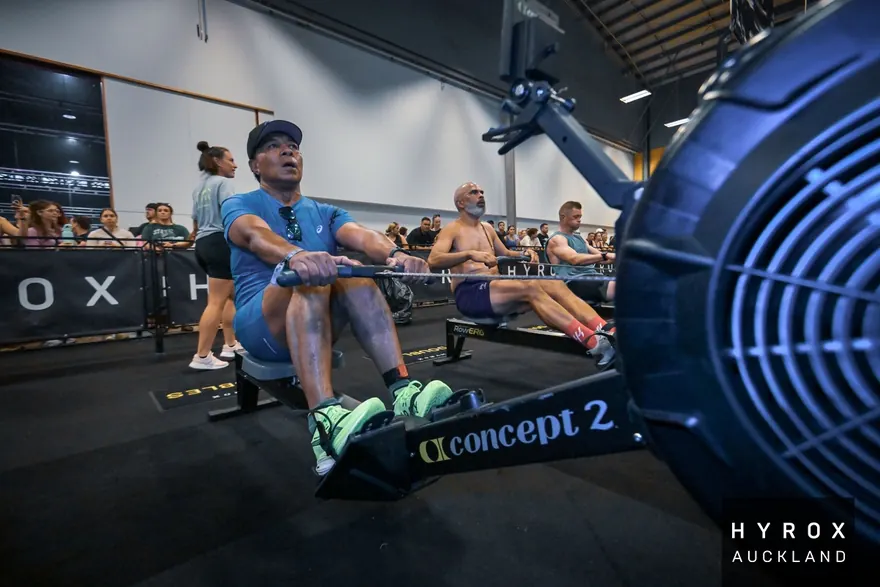
- Rowing, 1,000 m
- Farmers carry, 200 m
- Sandbag lunges, 100 m
- Wall balls, 100 reps
Sled, carry, lunge and wall ball weights vary by division. Check the official HYROX rulebook for your division and season before race day.
How long should you train for HYROX?
Most people benefit from at least 8 to 12 weeks of specific preparation before their first HYROX. If you are aiming for a fast time, a 16-week build gives more room. This plan uses 12 weeks in four phases.
| Weeks | Phase | Focus |
|---|---|---|
| 1 to 4 | Base | Easy running volume, learning every station, general strength |
| 5 to 8 | Build | Run intervals, heavier sleds and carries, running straight after stations |
| 9 to 11 | Race-specific | Race-pace runs into stations, half and full simulations |
| 12 | Taper | Less volume, a little intensity, rest and race |
The 12-week HYROX training plan
Each week has four to five sessions. If you train with our HYROX Club, the three club sessions slot straight in: Tuesday 6am (endurance and pacing), Thursday 5:30pm (strength and technique) and Saturday 9:15am (full HYROX simulation).
| Day | Weeks 1 to 4 | Weeks 5 to 8 | Weeks 9 to 11 |
|---|---|---|---|
| Tuesday: engine | 30 to 40 min easy run or SkiErg/row intervals | 6 x 800 m at hard effort, 2 min rest | 5 x 1 km at race pace with 2 min rest |
| Thursday: strength | Squats, lunges, deadlifts, pulls; learn sled and wall ball technique | Heavy sled push and pull sets; farmers carries; wall ball sets of 25 | Race-weight stations, short rest, then a 400 m run after each |
| Saturday: simulation | 4 x (1 km easy run + 1 station at light weight) | Half simulation: 4 runs + 4 stations | Full simulation in week 10; half in weeks 9 and 11 |
| Extra run | 30 min easy | 40 min easy, with the last 10 min steady | 45 min easy |
| Optional | Mobility or a second strength session | Mobility; an easy row or bike | Mobility and recovery |
Week 12: taper and race week
Cut your volume by about half. Keep two short sessions with a few race-pace efforts early in the week, then rest for the two days before the race. Sleep, eat familiar food, and arrive with time to warm up.
Beginner and experienced tracks
First HYROX (beginner track)
Run the plan as written, walk where you need to in long runs, and use lighter sleds until technique is solid. Aim to finish strong and learn the course.
Done one before (experienced track)
Add a second interval session in weeks 5 to 11, push station weights above race weight in the strength sessions, and race the week 10 simulation.

How to build your own HYROX plan
- Run three times a week, mostly easy, with one session of intervals or race-pace work. If you cannot yet run 5 km, start with our couch to 5k plan first.
- Strength twice a week, built around squats, lunges, deadlifts, pushes and pulls.
- Practise compromised running: run 400 m to 1 km straight after a hard station.
- Learn the stations early so technique holds up when you are tired, especially the sleds and wall balls.
- Simulate the race every two to three weeks, and use it to plan your pacing.
Want your training zones measured rather than guessed? A VO2 max test sets your run paces from your own data. For one-to-one race strategy, our HYROX coaches offer sessions at $85 an hour, or work with one of our personal trainers.
Training for HYROX in Auckland
The Exercise Room in Parnell is an official HYROX training facility, with SkiErgs, sleds, sandbags, wall balls and more set up to match the race. Our club sessions are included with Platinum membership, or you can buy a 10-class pass for $350 (valid for three months). Our coaches recommend two to three HYROX-specific sessions a week, plus your own strength and endurance work.
Frequently asked questions
How many days a week should I train for HYROX?
Four to five days works for most people: two to three HYROX-style sessions, one or two runs, and strength. Recovery days matter as much as training days.
Can a beginner do HYROX?
Yes. HYROX has divisions for different levels, and many first-timers finish with 12 weeks of steady preparation.
When should I start HYROX training?
Start at least 8 to 12 weeks before race day, or around 16 weeks if you want a faster time.
When should I taper for HYROX?
Taper in the final week: halve your training volume, keep a few short efforts and rest for the last two days.
Do I need special equipment to train for HYROX?
Sleds, a SkiErg and a rower make the stations much easier to practise. Our Parnell gym has all of the HYROX equipment.
About this guide
This plan is written by The Exercise Room, an official HYROX training facility in Parnell, Auckland, which runs coached HYROX Club sessions three times a week. Last reviewed November 2026. The race format comes from HYROX's published race information; the plan reflects our club's coaching approach. Check the official rulebook for your division's weights. Corrections are welcome at info@theexerciseroom.co.nz.